1
Start the setup
Choose the main item that fixes the decision this guide is about.
- Aquarium Water Change SiphonView on Amazon
- Seachem Prime Water ConditionerView on Amazon
Expert gear match · best water change siphon for 5 gallon tank
Choose a water change siphon for a 5 gallon aquarium by tube size, flow control, gravel depth, and how gently it cleans around plants and shrimp.
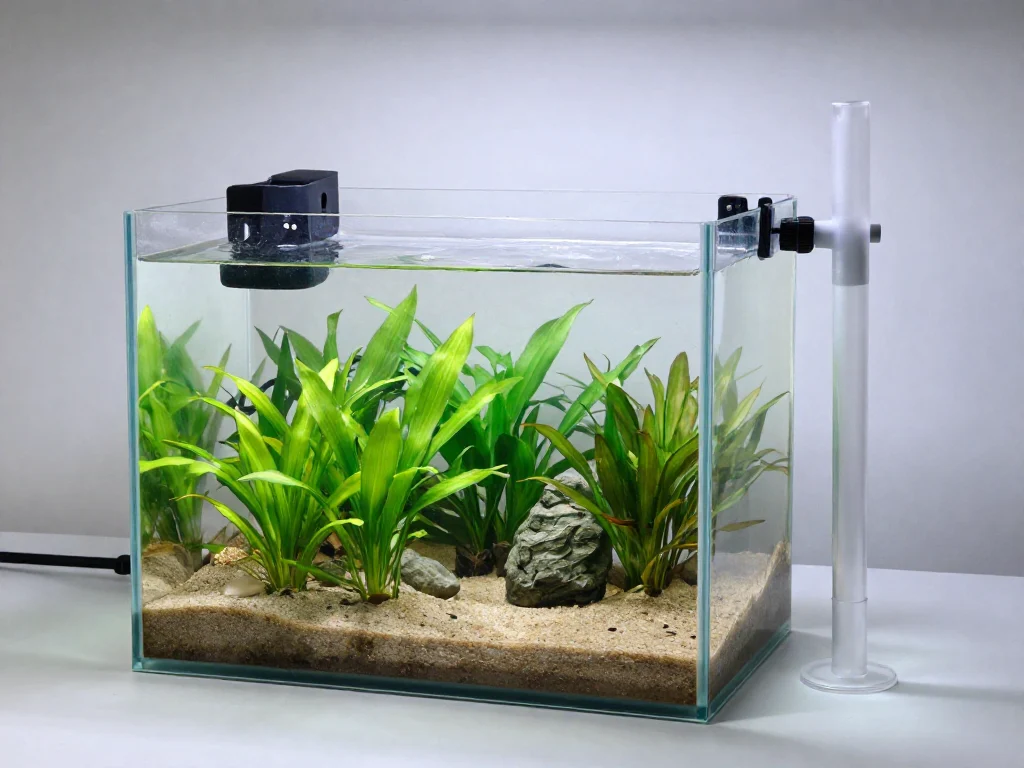 Recommended setup illustration
This guide uses its dedicated setup illustration. Multi-angle views are added only when they represent the same completed setup.
Choose with confidence
Skip oversized gravel vacuums made for deep large-tank gravel beds, and do not drain water faster than you can match temperature and conditioner during refill.
Use a small siphon and change a controlled portion of water; large gravel vacs can drain a five gallon tank too fast.
Buy in this order
The buyer wants a clean small tank but needs a siphon that works around plants, shrimp, and shallow substrate without making a routine water change harder.
Choose the main item that fixes the decision this guide is about.
Add the water, livestock, or compatibility safeguard before changing the look.
Finish the result only after the core system is working as intended.
A siphon turns maintenance from a messy chore into a repeatable routine, which keeps beginner tanks alive longer.
Water conditioner is not optional when using chlorinated tap water for planted tanks.
Strips are convenient for spotting changes in an established tank, so owners are more likely to test consistently.
Ammonia, nitrite, nitrate, and pH tests prevent the most expensive beginner mistake: adding livestock to an unsafe tank.
A cheap safeguard that prevents shrimp fry from entering hang-on-back filters and softens intake pull.
Expert notes
Choose a narrow tube that fits around hardscape and plants.
Questions before buying
A consistent modest change is usually easier on a stable small tank than a large irregular change. Adjust the amount when testing or a specific issue calls for it.
It can if the tube is too large or flow is too strong. Work slowly, keep the intake visible, and use a shrimp guard or fine mesh when needed.
Clean exposed debris and open areas, but do not repeatedly deep-vacuum planted substrate where roots and beneficial bacteria are established.