1
Start the setup
Choose the main item that fixes the decision this guide is about.
- Fluval Plant and Shrimp StratumView on Amazon
- CaribSea Eco-Complete SubstrateView on Amazon
Expert gear match · best substrate for shrimp tank
Choose shrimp tank substrate by water stability, plant growth, buffering, mineral needs, and beginner risk.
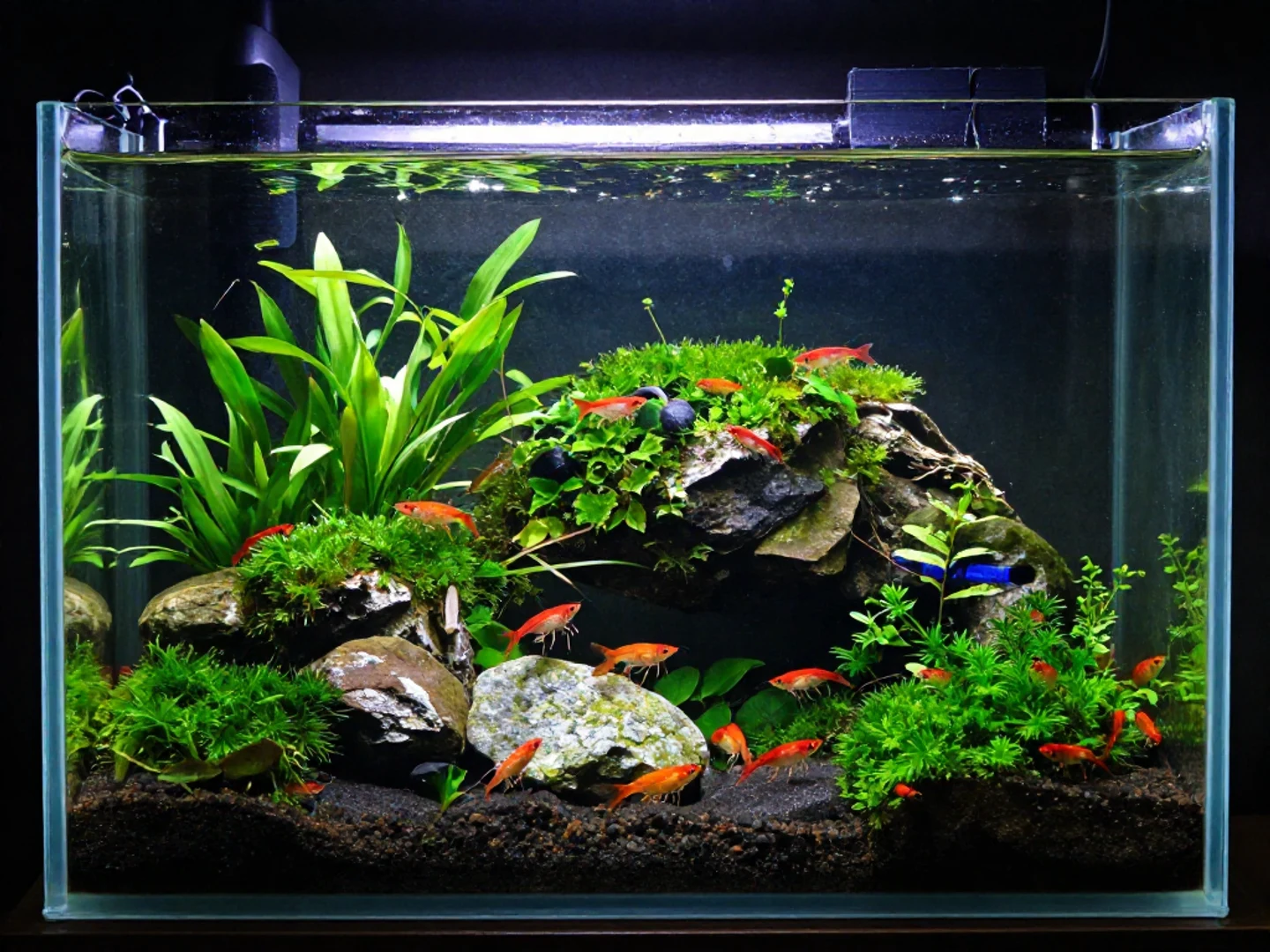 Recommended setup illustration
Choose with confidence
Avoid changing substrate in an established shrimp colony unless you are prepared for parameter swings.
Test hardness after adding active substrate and avoid changing both substrate chemistry and mineral dosing at the same time.
Buy in this order
The reader is buying substrate before setting up a shrimp tank and needs to avoid water-chemistry surprises.
Choose the main item that fixes the decision this guide is about.
Add the water, livestock, or compatibility safeguard before changing the look.
Finish the result only after the core system is working as intended.
Useful when the setup benefits from softer water, root support, and a planted-tank look without ADA-level cost.
Good fit for low-tech tanks because it is easier to manage than nutrient-rich aquasoil.
Useful if your source water is too soft or you use RO water for a shrimp tank.
The safest filter style for shrimp fry and long-finned bettas because it provides biological filtration without a hard intake.
Ammonia, nitrite, nitrate, and pH tests prevent the most expensive beginner mistake: adding livestock to an unsafe tank.
Expert notes
Decide whether you need buffering before buying substrate.
Questions before buying
Not always. Many cherry shrimp do well with inert substrate if the water parameters are stable.
It can be, especially for planted tanks, but it may buffer water and release ammonia early.
Only if testing shows your water is too soft or you use RO water.